
Body Armor Plates
TSD supplies body armor plates to armed forces, law enforcement agencies and private security contractors. The range includes Level III (NIJ RF1) and Level IV (NIJ RF3) stand-alone hard armour plates in polyethylene and ceramic (silicon carbide or alumina) + PE, single or multi-curved.
Our armor plate range
Three plate types, all with the same size and test standard:
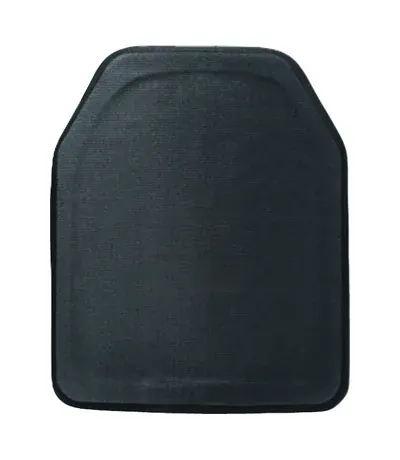
PE Level III plate (RF1)
The lightest plate in the range, made of 100% polyethylene (PE). Single-curved; a multi-curved version is also available.
| Protection | NIJ 0101.07 RF1 (Level III), stand-alone 6 shots each: 7.62×51 mm M80 FMJ, 7.62×39 mm MSC, 5.56×45 mm M193 |
|---|---|
| Material | 100% PE |
| Weight | 1.45 kg |
| Shape | Single-curved (multi-curved available) |
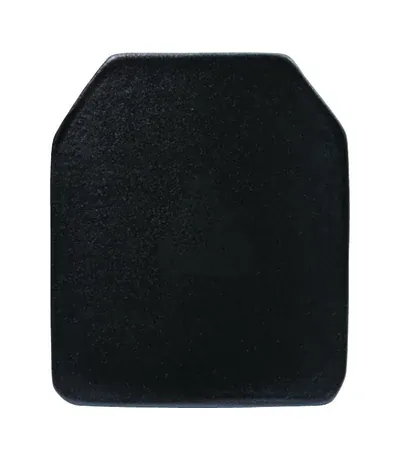
Ceramic + PE Level III plate (RF1)
RF1 plate with a hard ceramic strike face of silicon carbide (SiC) or alumina (Al2O3), backed by PE. Single-curved; a multi-curved version is also available.
| Protection | NIJ 0101.07 RF1 (Level III), stand-alone 6 shots each: 7.62×51 mm M80 FMJ, 7.62×39 mm MSC, 5.56×45 mm M193 |
|---|---|
| Material | Silicon carbide (SiC) + PE or alumina (Al2O3) + PE |
| Weight | 2.30 kg (silicon carbide) 2.45 kg (alumina) |
| Shape | Single-curved (multi-curved available) |
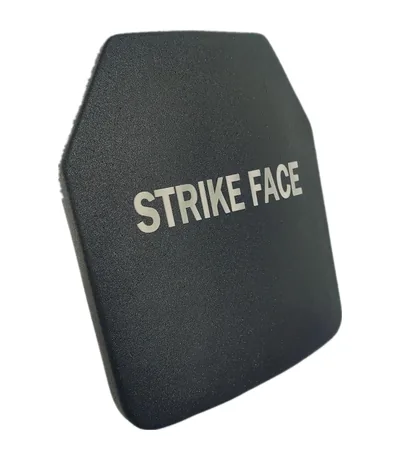
Ceramic + PE Level IV plate (RF3)
Rifle plate rated for armour-piercing rounds, with a silicon carbide (SiC) or alumina (Al2O3) ceramic strike face backed by PE. Multi-curved; a single-curved version is also available.
| Protection | NIJ 0101.07 RF3 (Level IV), stand-alone 1 or 3 shots .30-06 M2 AP |
|---|---|
| Material | Silicon carbide (SiC) + PE or alumina (Al2O3) + PE |
| Weight | 2.50–2.80 kg (silicon carbide) 2.70–2.95 kg (alumina) |
| Shape | Multi-curved (single-curved available) |
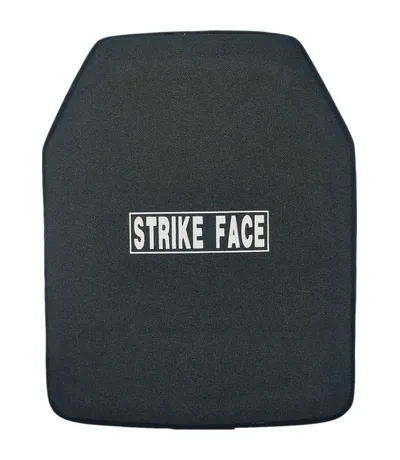
Level IV plates: cuts and finishes
Level IV plates are available with a silicon carbide or alumina strike face, in shooter’s cut or square cut.
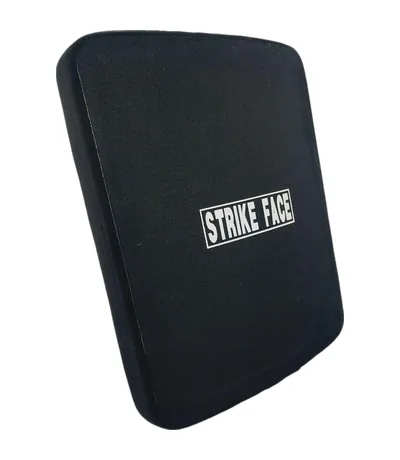
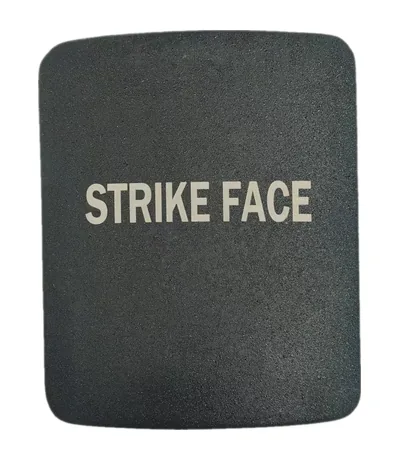
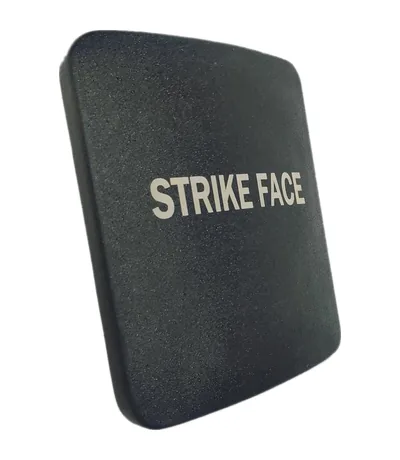
Specifications are indicative and may vary by configuration. Contact us for full technical data.
Who we supply
We supply body armor plates to:
- Armed forces
- Police and law enforcement agencies
- Special and tactical units
- Border security units
- Private security contractors
How to choose an armor plate
Protection level. Level III (RF1) plates are tested against common rifle rounds: 7.62×51 mm M80, 7.62×39 mm and 5.56×45 mm M193, six shots of each. Level IV (RF3) plates are tested against .30-06 M2 armour-piercing rounds and are the choice where armour-piercing threats are expected.
NIJ 0101.07 is the current US standard for body armour. Its rifle levels replace the earlier ones: RF1 replaces Level III, and RF3 replaces Level IV.
| RF1 (Level III) | 7.62×51 mm M80 FMJ, 7.62×39 mm MSC, 5.56×45 mm M193 |
|---|---|
| RF3 (Level IV) | .30-06 M2 armour-piercing (AP) |
Material and weight. Polyethylene (PE) plates are the lightest, at 1.45 kg. Ceramic + PE plates add a hard strike face of silicon carbide or alumina; at the same protection level, silicon carbide plates are lighter than alumina ones.
Single or multi-curved. All three plates are available in both shapes. Single-curved plates curve from side to side; multi-curved plates also curve from top to bottom to follow the shape of the body more closely.
Size. All plates are 250 × 300 mm, close to the common 10 × 12 in plate size, and fit the 10 × 12 in plate pockets of our tactical vests.
Stand-alone. All plates are stand-alone: they reach their protection level without a soft armour panel behind them.
Complete ballistic protection
TSD also supplies body armour vests, concealed vests and visors, ballistic helmets and riot shields, so plates can be ordered together with other protective equipment.
Supply worldwide
TSD is based in Dubai, UAE, and supplies customers in the Middle East, Africa, South America, the Indian Subcontinent and South East Asia. Most of our business is export, and we ship worldwide.
Frequently asked questions
What protection levels do your armor plates have?
Level III (NIJ 0101.07 RF1) and Level IV (NIJ 0101.07 RF3). All plates are stand-alone.
What is the difference between Level III and Level IV plates?
Level III (RF1) plates are tested against 7.62×51 mm M80, 7.62×39 mm and 5.56×45 mm M193 rifle rounds. Level IV (RF3) plates are tested against .30-06 M2 armour-piercing rounds.
What are the plates made of?
Polyethylene (PE), or a silicon carbide or alumina ceramic strike face backed by PE.
How much does an armor plate weigh?
1.45 kg for the PE plate, 2.30–2.45 kg for ceramic + PE Level III plates, and 2.50–2.95 kg for Level IV plates.
What size are the plates?
250 × 300 mm (approx. 10 × 12 in), single-curved or multi-curved.
Do you supply plates in bulk for government orders?
Yes. We supply armed forces, law enforcement agencies and contractors and ship worldwide. Send us the plate types, protection levels and quantities for a quote.
Request a quote
Tell us about your unit, the plate types, protection levels and quantities you need, and the delivery country. Our team will come back to you with a quote.
Contact us to discuss your equipment requirements
We can help in all aspects of procuring defence solutions and our experienced team are on hand and ready to help.