Mine Detection & Demining Solutions in Ghana
TSA International supplies advanced mine detection and demining technologies to authorised organisations in Ghana — military engineering units, EOD teams, police, humanitarian organisations and government agencies responsible for managing explosive hazards and clearing land.
Advanced Technology
Mine Detection & Demining Solutions for Ghana’s Operational Requirements
Our equipment is designed to detect, identify and safely manage explosive hazards. That work is unforgiving. It is done carefully, in difficult ground, by people whose safety depends entirely on the reliability of what they are using. Everything we supply is chosen with that in mind.
Mine Detection & Demining Equipment in ghana
The technologies we provide are internationally proven in demanding operational environments, and we back them with specialist support for explosive hazard management and land clearance projects. Whether the requirement is military engineering, the survey of ground ahead of construction, or the safe clearance of a discovered hazard, we supply the detection capability and the supporting equipment to do it properly.
All equipment is supplied to vetted government, military and authorised humanitarian end users, within the export control and end-use requirements that apply.
Mine Detection & Demining Equipment We Supply to Ghana
Mine Detectors & Ground Search Systems
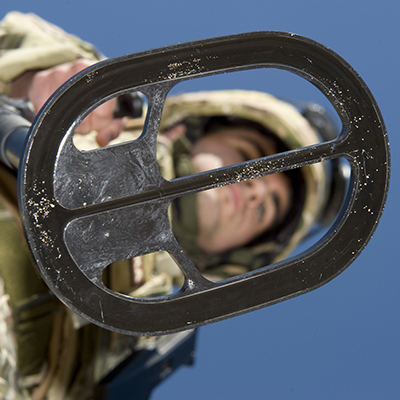
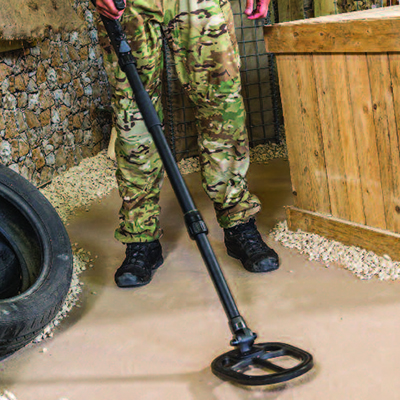
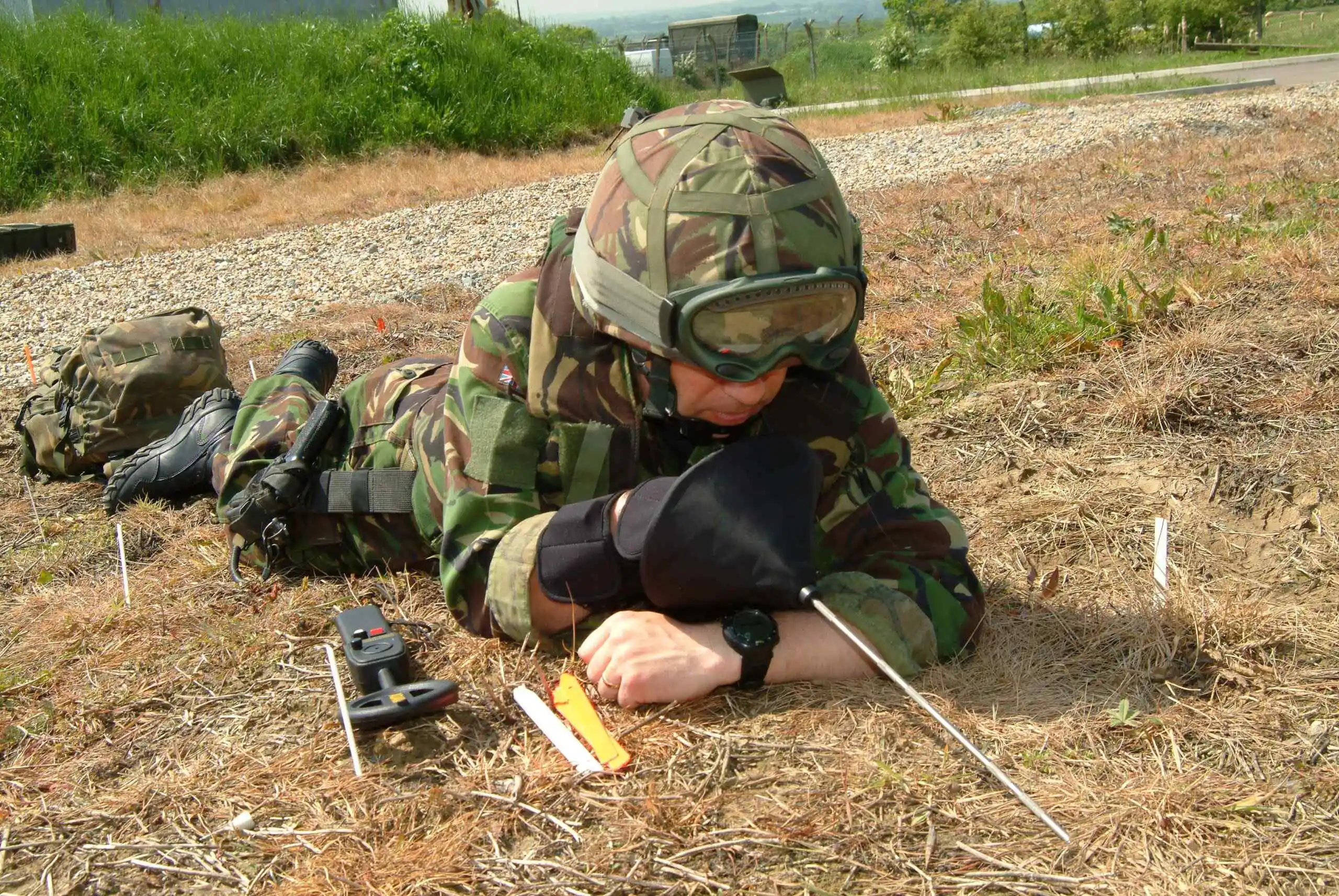
TSA supplies portable mine detectors and ground search systems to Ghana’s military, peacekeeping and infrastructure survey teams. High-sensitivity detection finds mines and UXO at operationally relevant depths across varied terrain, and discrimination features help tell real targets apart from metal clutter.
The systems are built for field use and perform reliably in hot, humid and dusty conditions. They work in the environments Ghana’s teams encounter at home and on international deployments, from farmland and forest to savannah and difficult ground.
Ground Penetrating Radar (GPR) Systems
TSA supplies Ground Penetrating Radar (GPR) systems for detecting buried mines, UXO and IEDs that contain little or no metal. Subsurface imaging identifies possible threats in different soil types, cuts down false positives and speeds up surveys.
Systems that combine GPR with metal detection offer wider detection capability. They support Ghanaian teams on complex clearance tasks, route search and infrastructure surveys.
Demining Protective Equipment
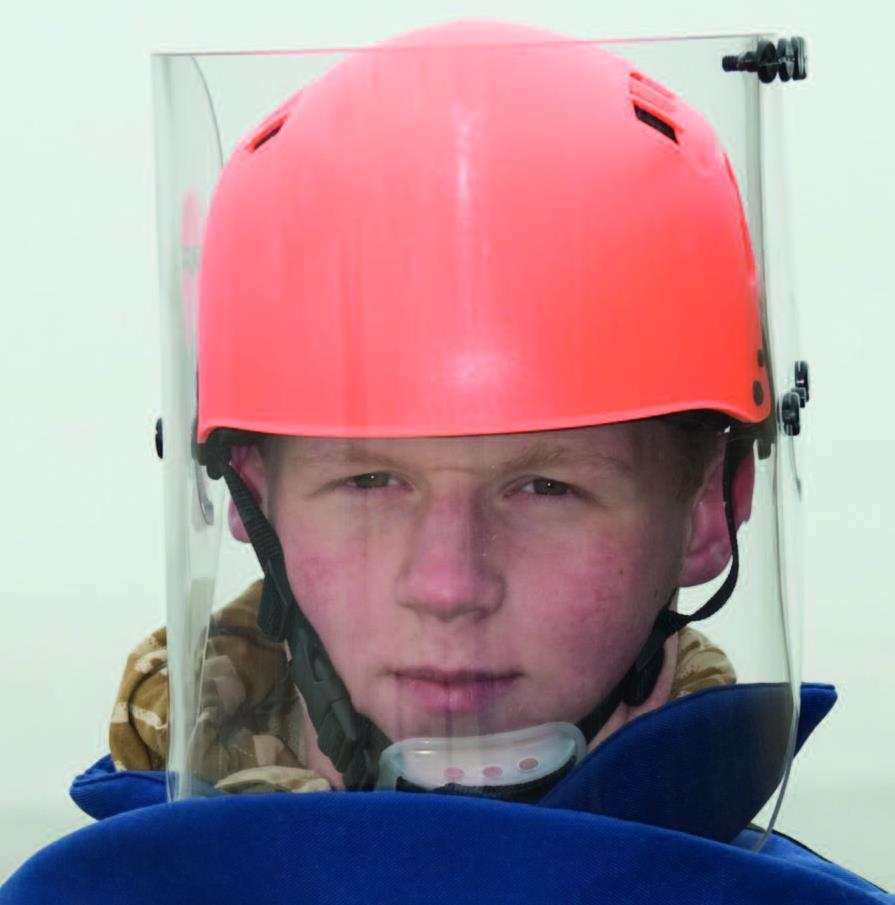
TSA supplies demining protective equipment that shields operators from blast and fragments during mine and UXO clearance. The range includes blast-resistant clothing, protective helmets, visors and fragmentation protection systems.
Lightweight, breathable designs balance protection against mobility and comfort. This matters on long operations in Ghana’s tropical climate, where managing heat is a key concern.
Mechanical Demining Equipment
TSA supplies remote-controlled demining systems and armoured clearance platforms for large-area mine and UXO operations, including training range clearance in Ghana and mine action on international deployments. The systems clear vegetation, reduce surface hazards and prepare the ground, keeping operators out of areas that are unsafe to enter.
Mechanical platforms speed up hazard reduction and prepare the ground for manual clearance. This lets teams cover larger areas while keeping working conditions safer.
UXO & Explosive Hazard Detection Systems
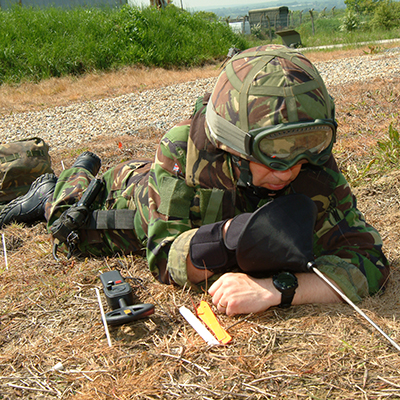
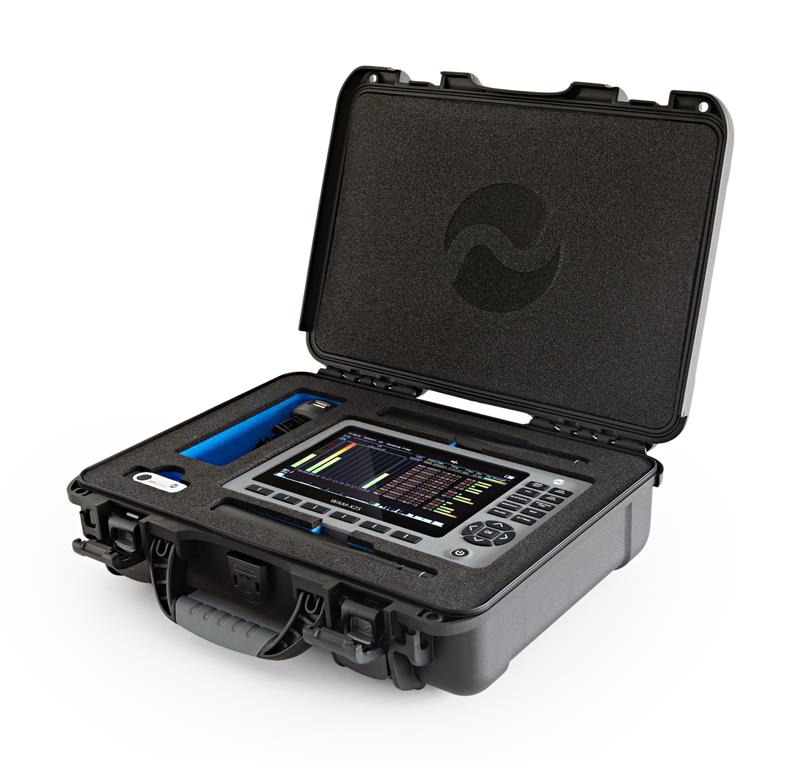
TSA supplies specialist UXO detection and identification systems for military, peacekeeping and infrastructure clearance operations in Ghana. They help teams detect and assess bombs, artillery shells, grenades, rockets, mortar rounds and other explosive hazards in difficult terrain.
Portable systems let field teams assess suspect items and plan the right clearance procedure. They support safer, more efficient work in all kinds of settings, from military training areas and construction sites to farmland and riverbanks.
EOD & Remote Handling Support Equipment
TSA supplies EOD and remote handling equipment for the safe inspection and disposal of mines and UXO once they have been found. The range includes remote-operated systems, tactical inspection tools and specialist equipment for render-safe procedures, so teams can assess and deal with explosive hazards from a safer distance.
This equipment complements wider detection and demining work. It supports military, peacekeeping and infrastructure clearance requirements across Ghana.
Why security organisations in Ghana choose TSA International
Equipment in action
Deployment & training imagery
Applications Across Ghana
- Military engineering requiring detection and clearance capability
- Border security operations on ground with a hazard history
- Mining operations requiring ground survey and hazard management
- Infrastructure projects on ground that must be certified safe
- Road construction across previously unsurveyed terrain
- Energy developments onshore requiring clearance certification
- Humanitarian operations and land release
- Government agencies with an explosive hazard management mandate
- Public safety where a hazard is discovered near populated areas
- Emergency response to discovered ordnance
Why Mine Detection Technology Matters in Ghana
Explosive hazard detection is a standing capability requirement, and in a country investing in infrastructure, mining and energy, it sits directly on the critical path of development. Land that cannot be certified as clear cannot be built on, worked or safely crossed. Reliable detection capability is what makes that certification defensible.
Applications & operational environments
Detection and clearance capability supports Ghana by:
-
Supporting infrastructure growth. Roads, energy projects and industrial developments frequently push into ground that has not been surveyed. Detection capability allows that ground to be assessed and released safely.
-
Improving construction safety. Site investigation ahead of works protects construction personnel and prevents costly delays and incidents when the ground is disturbed.
-
Enhancing military engineering capability. Engineering units need detection and clearance capability to support operations and to work safely on potentially hazardous ground.
-
Protecting personnel. Good equipment reduces both the risk to the operator and the risk of an item being missed — the two failures that matter most in this work.
-
Supporting mining operations. Ground survey and explosive hazard management support safe access, development and operation across remote mining sites.
-
Strengthening emergency preparedness. When ordnance is discovered, agencies need the equipment and the trained people to respond safely and quickly.
-
Increasing operational efficiency. Modern detection and mechanical clearance capability increases the area assessed and cleared without cutting corners on safety.
-
Building long-term national resilience. A sustained detection and clearance capability underpins safe development and a resilient response to explosive hazards over time.
Frequently asked questions
What mine detection technologies are suitable for infrastructure projects in Ghana?
For infrastructure work, site investigation typically uses metal detection and ground-penetrating radar, often combined in a dual-sensor system, to survey ground ahead of construction and certify it as safe. We advise on the right combination for the ground and the project.
Can mine detection equipment operate effectively in mining environments?
Yes. Mining environments often involve mineralised soil, which can degrade metal detection. Dual-sensor systems pairing GPR with metal detection are specified for exactly these conditions, and we match the equipment to the ground.
Which organisations use demining equipment in Ghana?
Military engineering units, EOD teams, police, government agencies, authorised humanitarian organisations and, for site investigation, engineering and construction operators all use detection and demining equipment.
How does ground penetrating radar improve explosive hazard detection?
GPR detects buried items by their physical presence rather than their metal content, which allows the detection of low-metal items and, when combined with metal detection, reduces the false-alarm rate in difficult and mineralised ground.
Can mine detection systems be integrated into existing engineering operations?
Yes. Detection equipment and procedures can be integrated into existing military engineering and construction site-investigation workflows, and we provide technical consultation and operator training to support that.
Does TSA International provide technical consultation before procurement?
Yes. Technical consultation is central to what we do. Detector selection depends heavily on soil conditions and expected target type, and we advise honestly on the right equipment for the ground and the task.
What ongoing support is available after equipment delivery?
We provide long-term support, including maintenance, calibration guidance and spares, so that detection equipment stays serviceable and effective over its working life.
Are complete mine action solutions available for government agencies?
Yes. We supply integrated mine action solutions combining detection equipment, mechanical clearance capability, accessories, operator training and lifecycle support, configured as a coherent capability rather than a one-off supply.
Talk to Our Team
Contact TSA International to discuss mine detection technologies, demining equipment, and explosive hazard management solutions for authorised government, defence, and engineering organisations across Ghana.